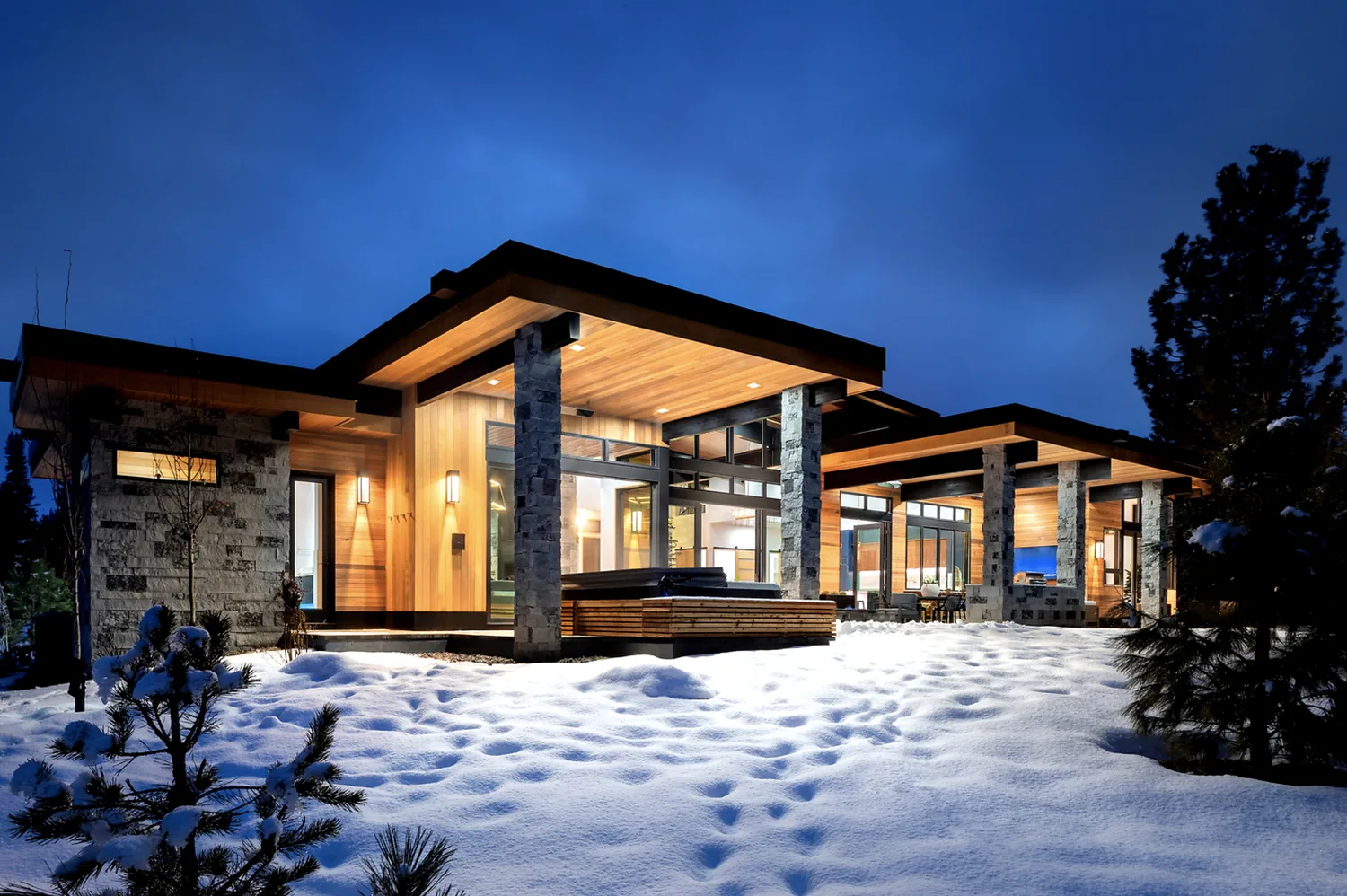
Manufactured stone, also sold as cultured, cast or faux stone, is made to look like stone. Natural stone veneer is stone: quarried, then sawn or split to a thin bed. Both are set the same way on a wall, so the differences are in the material itself.
| Natural stone veneer | Manufactured stone | |
|---|---|---|
| Made from | Quarried stone, sawn or split | Cement, aggregate and pigment, cast in molds |
| Color | Runs through the whole stone | Pigments and coloring applied in the mold |
| A cut or broken edge | The same stone as the face | Shows the cast body |
| Pattern | No two pieces alike | Shapes repeat from a set of molds |
| ASTM standard | By stone type (C615, C568, C616 and others) | C1670 |
| MasterFormat | 04 43 13.16 | 04 73 00 |
Where manufactured stone is fair
- Color is more consistent from box to box.
- Its backs are rough or grooved, which helps it key into mortar.
- It usually costs less up front, and needs less cutting on site.
Where natural stone stands apart
- It’s the real material. Corners, cut edges and returns show the same stone as the face, because there is nothing else inside.
- Its color is the stone’s own, through the whole piece, so a chip or a fresh cut matches.
- It can be worked on site. A mason can trim, re-split and dress natural stone to fit an opening.
- One stone can carry the whole project: the same stone as veneer, pavers, caps, sills and coping.
- Dense stones absorb very little water: the granite and marble standards allow well under 1% absorption.
What both need to last
Natural and manufactured veneer are both adhered systems, and most failures in either come from the wall behind them: water getting in and not getting out, missing flashing, corroded lath, poor mortar coverage. A good mason, a proper water-resistive barrier and a weep screed matter as much as the stone. Natural stone with a smooth, dense back needs full mortar coverage to bond.
Questions worth asking
- Is it quarried stone, or cast? Which ASTM standard does it meet?
- What does a cut edge or a broken piece look like?
- Can I see a corner piece and a sample of the full color range?
- Can the same material be used for the caps, sills and paving?
We only supply natural stone: all natural, all the time. See our stones or the real projects in Projects, and ask for samples to hold the two side by side.
Updated November 2026. Part of Insights.