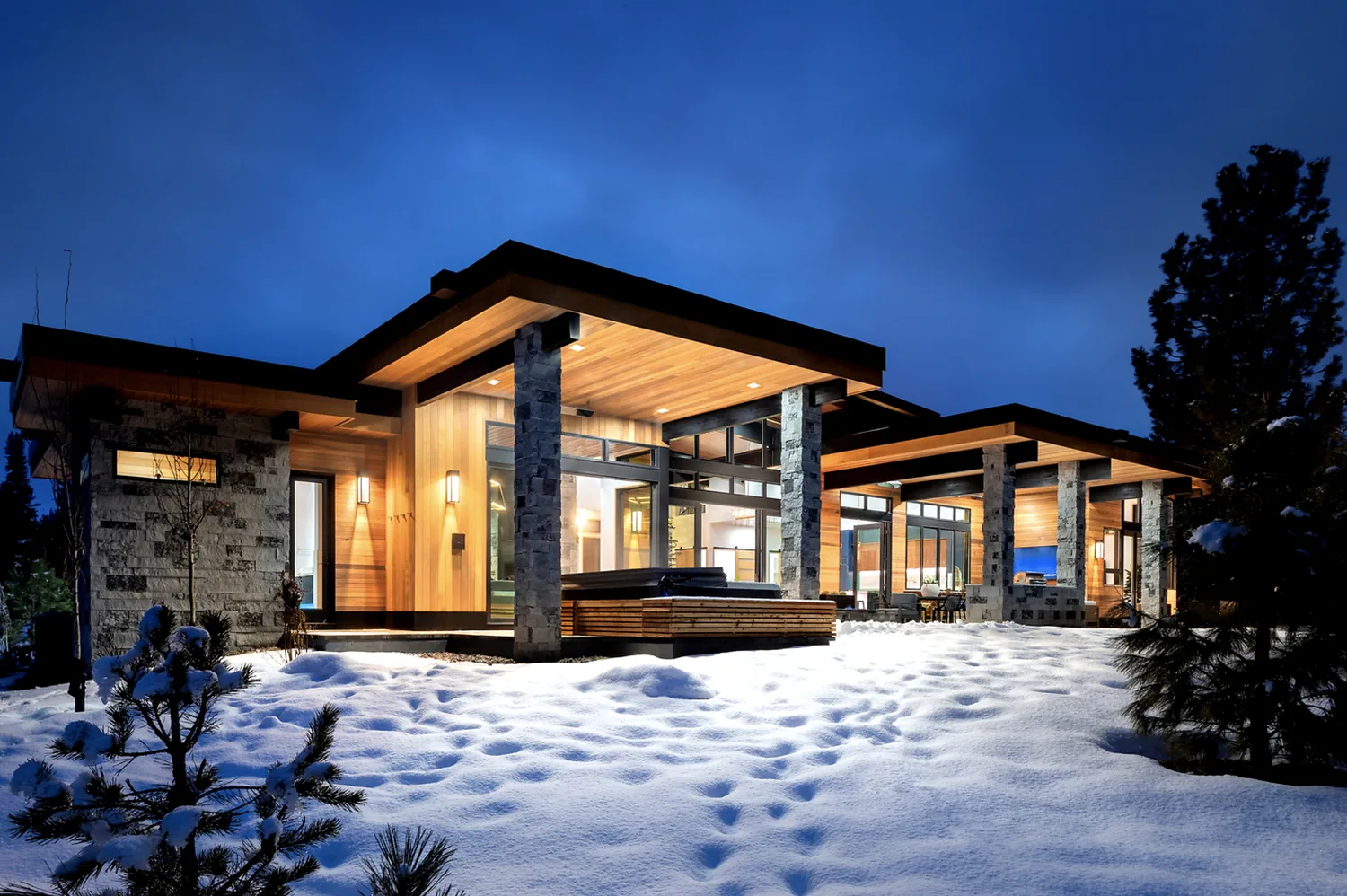
Natural thin veneer is real stone, sawn to about 1¼ in deep and set in mortar. Specifying it well comes down to five things: the right section, the right material standard, the test data behind it, the code limits for adhered stone, and a mockup that sets the standard for the job.
A guide, not a specification. Standards and codes change by edition; confirm the editions your jurisdiction has adopted, and your engineer has the final word on the wall.
Where it goes in the spec
| Work | MasterFormat section |
|---|---|
| Natural thin veneer (adhered) | 04 43 13.16 Adhered Stone Masonry Veneer |
| Full veneer (anchored) | 04 43 13.13 Anchored Stone Masonry Veneer |
| Caps, sills, coping and other cut stone | 04 43 00 Stone Masonry, by drawing |
| Stone pavers | 32 14 40 Stone Paving |
| Manufactured (cast) stone, for contrast | 04 73 00 Manufactured Stone Masonry |
Keeping natural and manufactured stone in their own sections keeps a substitution from slipping through on a look-alike product.
Name the material standard
Each kind of stone has its own ASTM standard, which sets minimums for density, absorption, strength and abrasion. Cite the one for your stone, and for limestone and sandstone the class.
| Stone | ASTM standard |
|---|---|
| Granite | C615 |
| Marble | C503 |
| Limestone | C568 (Classes I, II and III, by density) |
| Sandstone, quartzitic sandstone, quartzite | C616 |
| Slate | C629 |
| Basalt | None of its own; the industry groups it with granite |
Ask for the test data
- Absorption and density: ASTM C97 (absorption and bulk specific gravity).
- Compressive strength: ASTM C170.
- Modulus of rupture and flexural strength: ASTM C99 and C880.
- Abrasion, for paving and treads: ASTM C1353 or the older C241, on different scales.
There is no ASTM freeze-thaw test for dimension stone yet; the concrete tests sometimes quoted (C666, C1645) aren’t stone standards. In freeze and thaw, look at absorption and the stone’s track record. We send each stone’s tested data where the quarry has it.
Code limits for adhered stone
The building code sets adhered veneer limits through TMS 402/602, and they differ by edition:
- TMS 402-16 (the 2018 and 2021 IBC and IRC): units up to 15 lb per sq ft and 2⅝ in thick, no face over 36 in or 5 sq ft.
- TMS 402-22 (the 2024 IBC and IRC): up to 30 lb per sq ft and 720 sq in of face; units over 360 sq in need approved installation procedures; the setting bed is a polymer-modified mortar (ANSI A118.4 or A118.15).
- California’s 2025 code holds adhered units to 15 lb per sq ft and asks for anchored veneer above 20 ft when units are thicker than ⅝ in.
- Bond: at least 50 psi shear bond, by ASTM C482 in the lab or C1823 in the field. California asks for the field test on the mockup.
Natural thin veneer at about 1¼ in and within 15 lb per sq ft fits the adhered limits. Full veneer, at 3 to 5 in, is anchored: it rests on a footing or ledge with ties, under the anchored veneer rules.
The wall behind it
Detail it as an adhered stone assembly: a water-resistive barrier (two layers over wood sheathing under the IRC), corrosion-resistant self-furring lath, a scratch coat, then the setting bed and stone. A weep screed at the base sits at least 4 in above soil and 2 in above paving. Dry-stack (no visible joint) isn’t recommended for adhered veneer where it freezes and thaws; choose a mortared joint there.
Submittals and the mockup
- Samples that show the stone’s natural range, not one hand-picked piece.
- Test data to the standard you named, and shop drawings for caps, sills, coping and other cut pieces.
- A mockup panel, about 3 by 3 ft, that the design team approves for pattern, joint, grout color and workmanship. It becomes the standard for the rest of the wall, and the place for the field bond test.
- During the work, pull a unit now and then to check full mortar coverage, which smooth, dense stones need most.
Where we help
Send the project and the stones you’re specifying. We send samples, the tested data where the quarry has it, shop drawings and cut legends for architectural pieces, and, on request, help with the spec section’s wording.
Updated November 2026. Part of Insights.