No matches. Try a different search, or ask us directly.
Section 01
About Natural Stone & Kő
Who we are, what we work with, and what sets Natural Stone apart.
Who is Kő?
Kő, Hungarian for Stone, is a family-owned and family-run team. Our curated collection is the product of more than a decade alongside North America’s top architects, designers, and builders, guided by an unchanging conviction: Stone is the preeminent building material. We work with authentic Natural Stone in veneer, paving and coping, architectural elements, and bespoke Stone art from our Studio. Every detail tailored to your project: type, color, blend, cut, size, finish. Complimentary samples, project budgets, and AIA-accredited Lunch & Learns. Your concierge Stone partner from selection to delivery.
How do I get started with a project?
Three paths depending on how far along the project is. Pick whichever's easiest:
- Build it yourself. Drop your quantities into our Stone calculator at /stone-calculator and submit when you’re ready. Toggle Quick mode for just the numbers or Detailed mode to fully spec the project.
- Have us do the take-off. Send your project plans through Let’s Talk Stone at /engage and we’ll prepare a complimentary take-off and project budget, no estimating required on your end.
- Talk to us first. Call (800) 898-6452 and we’ll walk through Stones, styles, applications, and timing. Best for projects still in early design.
Either way, a real person on the Kő team responds within one business day.
What makes Kő Natural Stone different?
We love Stone. That love runs through everything we do, from the partners we choose at the quarry to the way we hand-pick samples for your project. Kő is a family-owned and family-run team working exclusively in authentic Natural Stone, no manufactured veneer, no precast, no synthetics. The majority of our material is quarried in the USA and Canada, cut to order, and shipped direct rather than sitting in a yard. You talk to the same team from first sample to final truck, which keeps quality tight, timelines honest, and the project a joy to work on.
Where does your Stone come from?
The majority of our Stone is quarried in the United States and Canada. North American sourcing is our default because it gives us tighter control over quality, lead times, and traceability, and a lower carbon footprint compared to imported material. For projects that call for a Stone we don’t cut here, historic matches, specialty finishes, or specific varieties from other regions, we can also source it on request.
How is Natural Stone different from manufactured or cultured Stone?
Natural Stone is the real thing, quarried from the earth, no two pieces alike, full density, full mass, and built to outlast the wall it’s set on. Manufactured veneer (also called cultured, cast, or faux Stone) is just pigmented concrete poured into rubber molds. It’s lighter and cheaper up front, but you pay for it over time: the pigments fade under UV, the same handful of molds repeats across the entire wall, it spalls and cracks under freeze-thaw, and it never develops the aged patina real Stone picks up over decades. Once homeowners and architects see the two side by side, there’s no contest, fake Stone is a faux pas the project will regret. Kő doesn’t carry manufactured veneer, never has, and never will. Our promise is “All Natural. All the Time.”
Is Natural Stone a sustainable building material?
Yes, and increasingly the material of choice for teams targeting high environmental performance. Natural Stone is quarried, not manufactured, so there are no plastics, resins, or synthetic pigments involved. The majority of ours travels short distances from North American quarries, which keeps embodied carbon low. It’s durable enough to outlast most buildings, it doesn’t off-gas, and at end of life it can be reused or returned to the earth. For LEED-certified projects and other green-building programs, tell us what you’re targeting and we’ll work with you on material selection and any documentation support we can help pull together.
Is Natural Stone safe in wildfire and fire-prone areas?
Yes. Natural Stone is a non-combustible, Class A fire-rated material, it won’t ignite, feed a fire, or release toxic smoke under high heat. That makes it one of the strongest cladding choices for wildfire-prone areas and Wildland-Urban Interface (WUI) zones. Full veneer, thin veneer, and Architectural Elements all qualify as non-combustible cladding under IBC Chapter 7 and California Chapter 7A (WUI) requirements. Paired with non-combustible trim, soffits, and roofing, Natural Stone is one of the most resilient exterior skins you can build.
Why does Natural Stone vary in color, pattern, and texture?
We craft and curate only the best Natural Stone. We celebrate the imperfections and textural richness that can only be found in nature. And when you work with nature and not against it, the wonder that you can bring into spaces and places is truly inspiring. For projects with tight color expectations, we recommend reviewing a sample board or seeing material in person before finalizing the order.
What types of Natural Stone do you offer, and how do they differ?
Natural Stone types are classified by how they form. The core families we work with: Limestone, a sedimentary rock composed primarily of calcite or dolomite. Soft, warm, and easy to fabricate; the most common dimension Stone in residential exteriors. Indiana Limestone, Buff, Cream, and many Estate Stones fall in this group. Granite, a hard, crystalline igneous rock made of feldspar, quartz, and mica. Highly weather- and abrasion-resistant; ideal for paving, treads, and high-traffic horizontal surfaces. Rocky Mountain Granite and Cambrian Black are examples. Sandstone, a sedimentary rock of quartz grains cemented with silica or calcium carbonate. Ranges from soft and friable to very hard depending on burial history. Reads warm and earthy. Mountain Valley and many Summer Collection Stones are sandstones. Quartzite, a metamorphic rock formed from sandstone under heat and pressure, much harder than the parent sandstone. Excellent for exterior use and freeze-thaw climates. Slate, a fine-grained metamorphic rock derived from shale. Splits easily into thin slabs along its natural plane; popular for paving, roofing, and feature walls. Marble, a metamorphic limestone, prized for veining and polished finishes. Best suited to interior applications; softer than granite and reactive to acidic cleaners. Travertine, a variety of limestone formed by chemical precipitate from hot springs, characterized by surface pitting and a layered texture. Common in Mediterranean and Tuscan architectural styles. Basalt, a dense, fine-grained volcanic rock, typically dark gray to black. Excellent thermal stability, well-suited to fireplaces, paving, and modern facades. Whistler Basalt and Black Basalt are examples. Across all eight types, our 64-Stone catalog spans every common architectural use case. We’ll help you match the right type to your application, climate, and design vocabulary.
Section 02
Choosing the Right Stone for Your Project
Matching Stone to climate, application, and aesthetic.
Are your Stones suitable for outdoor use and freeze-thaw climates?
Yes, most of our Stones are excellent for exterior horizontal and vertical use, including freeze-thaw climates, when properly installed with correct flashing, drainage, and mortar. Dense limestones, basalts, and granites are exceptional here: low water absorption, high compressive strength, and a long track record on some of the harshest building envelopes in the world. Softer or more porous varieties can also perform outdoors with the right installation and location. Share your climate, exposure, and install plan with us and we’ll recommend the best fit; final selection remains the buyer’s and installer’s responsibility to confirm for the site.
Can I use Natural Stone indoors?
Absolutely. Natural Stone is stunning inside, fireplace surrounds, feature walls, kitchen backsplashes, shower walls, entry floors, and full-slab countertops are all in our wheelhouse. Interior applications usually benefit from a penetrating sealer; softer Stones should be sealed before grouting on floors and countertops; and for wet areas we can recommend Stones with low water absorption. Share the space and intended use with us and we’ll walk through the best options for the aesthetic and performance you’re after.
What should I know about using Natural Stone for a fireplace or hearth?
Natural Stone is the original fireplace material, it handles high heat, it won’t burn, and it ages beautifully through decades of use. A few things to plan for: hearth Stones should be solid, dense, and a minimum of 2 inches thick per most residential codes (confirm requirements with your local jurisdiction); mantel Stones, especially long spans, need support sizing worked out with your mason; and firebox-adjacent Stone should be a heat-tolerant material like granite, basalt, or dense limestone rather than soft sandstone. We fabricate custom hearth Stones, mantels, and surrounds as standard work, and can cut to architect specifications on request.
Do you offer Natural Stone pavers?
Yes, paving is one of our core categories alongside veneer. We fabricate dimensional and flagstone pavers in standard sizes and custom cuts for walkways, patios, driveways, pool decks, and rooftop terraces. We offer paving in limestones, basalts, granites, sandstones, quartzites, and more, and we’ll guide you toward the Stones and finishes that fit your project’s needs, whether that’s freeze-thaw durability, slip resistance underfoot, or a specific color and finish direction. Standard thicknesses run about 1½ inches for adhered overlay applications up to 3 inches for sand-set or mortar-set exterior paving. On custom orders we can go as thin as ¾ inch and as thick as 4 inches or more. When a project also calls for veneer, wall caps, sills, or treads, we can often pull all of it from the same block of Stone, keeping color and character consistent across every element on site. Share the square footage, substrate, and climate with us and we’ll recommend the right Stone and thickness.
What’s the difference between flagstone and dimensional paving?
Both are Natural Stone paving, the difference is shape and coursing. Flagstone is irregular, hand-shaped Stone laid in a random pattern with variable joint widths; the installed look is organic and rustic, and each piece is hand-fit to its neighbors. Typical flagstone runs 1 to 2 inches thick and comes in random sizes off the pallet. Dimensional paving is sawn to precise rectangular sizes and held to a consistent thickness; the installed look is orderly and modern, with uniform joints and predictable coursing, it comes in single-size layouts, modular multi-size blends, and ashlar patterns. Flagstone reads informal and blends into the landscape; dimensional reads architectural and ties cleanly to a building. We fabricate both, and often blend them on the same project, dimensional near the structure, flagstone farther out into the garden.
Can you supply Stone for hardscape and landscape features?
Yes. Retaining walls, garden walls, steps, treads and risers, pool coping, outdoor kitchens, fire pits, water features, site walls, and boulder accents are all everyday work for us. We fabricate both the structural pieces (full-depth Stone for gravity walls, dimensioned treads, capstones) and the facing pieces (thin veneer over a structural wall for a seamless finish). For outdoor spaces that tie to a building, we’ll match the hardscape Stone to the architecture, same Stone or complementary, so the whole site reads as one composition.
Do you fabricate Architectural Elements like coping, sills, caps, treads, and surrounds?
Yes, custom Architectural Elements are one of our specialties. We fabricate coping and cap profiles for walls and parapets, wainscoting sills, window and door sills and lintels, treads and risers for stairs, mantels and surrounds for fireplaces, hearths, monuments, address Stones, balusters, and one-off Architectural Element pieces. One of the real advantages of working with us on a full project is that the same block of Stone can be cut for your veneer, pavers, wall caps, wainscoting sills, window sills, treads, and surrounds, keeping color, tone, and character consistent across every element on the site. Most Architectural Element work starts from Stoneprints we prepare against the architectural drawings, with profiles and dimensions confirmed before cutting. Share elevations, plans, or a reference image through Let’s Talk Stone and we’ll scope the piece list with you.
What’s the difference between thin veneer and full veneer?
Thin veneer is sawn Stone, typically about 1¼ inches deep and 10–15 lbs per square foot, installed over a prepared substrate with mortar, no structural footing required. Full veneer is full-depth Stone, typically 3–5 inches deep and 35–60 lbs per square foot, installed with a structural ledge or footing and wall ties like traditional masonry. Both use the same quarried material; thin veneer simply costs less to install because the weight is lower and no foundation work is required.
How much does thin Stone veneer weigh?
Thin veneer weighs approximately 10 to 15 pounds per square foot. A typical pallet carries about 150 SF of flats at 1,800–2,200 lbs, with corners shipped on separate pallets at roughly 100 LF per pallet and 500–1,000 lbs.
Do you offer custom fabrication?
Yes, custom fabrication is a core part of what we do. Custom sizes, blends, cuts, shapes, and finishes are all available, along with coping profiles, sills, treads, hearths, surrounds, caps, corbels, and one-off Architectural Element pieces. Share dimensions, elevations, or an inspiration image through our Let’s Talk Stone form and we’ll work up a quote.
Can you source a specific Stone that isn’t listed on your website?
Yes. Our website highlights the Stones we work with most often, but our network of quarry and supplier relationships reaches well beyond what’s shown there. If you’ve seen a Stone somewhere else, an architectural precedent, an inspiration photo, a specific quarry or formation name, or a match to existing stonework, send us what you have and we’ll work on sourcing it. Availability, lead time, and pricing vary by Stone, and we’ll confirm each before placing any order.
Can I request samples or order small quantities?
Yes. Request hand-selected physical samples through our Let’s Talk Stone page and we’ll ship them quickly so you can see color and texture in person. Small-quantity orders are welcome; they typically travel as less-than-truckload (LTL) freight or alongside another shipment heading to your region.
Can you help me choose the right Stone for my project?
Yes, we offer a complimentary selection consultation. Share your project details (location, application, aesthetic direction, budget, and timeline), and we’ll pull samples, suggest collections, and walk through pattern and grout options with you. It’s often the most useful thirty minutes at the start of a project, and it saves a lot of back-and-forth down the line.
Section 03
The Look: Patterns, Grout & Detail
Dialing in how the finished wall reads.
What install patterns are available?
Pattern selection is one of the biggest drivers of how a finished Stone wall reads. The four we fabricate for most often:
- Ledgestone, coursed rectangular pieces of varied heights laid in horizontal bands with tight joints. The most popular pattern in contemporary masonry and a good fit for almost any architectural style.
- Coursed, a more structured version of ledgestone where each row is cut to a consistent height and the rows alternate by size. More formal and architectural than random ledgestone, and a strong choice for traditional or transitional facades.
- Ashlar, a mix of rectangular and square pieces in different sizes, laid in a semi-organized layout. Reads more traditional and varied than straight ledgestone. The industry recognizes three sub-variants: “random ashlar” (neither vertical nor horizontal joints continuous, the most common), “coursed ashlar” (continuous horizontal joints), and “stacked ashlar” (continuous vertical joints, modern and rare).
- Random (or rubble), irregular shapes laid in an organic, hand-placed pattern. The most rustic of the common patterns and the classic East Coast fieldstone look.
We’ll help you pick a pattern that fits the architecture, the Stone, and the installer’s comfort level, and we can fabricate mixed blends when a project calls for something between the standard patterns.
What grout styles can I choose from?
Grout style is how the mortar between Stones is finished, and it’s one of the biggest visual levers in a Stone project. The most common options:
- Dry-stack, no visible mortar joints (mortar is set back behind the Stone face and hidden from view). Creates a tight, clean, contemporary look; works best with dense, regular-shaped Stone.
- Flush, mortar troweled level with the face of the Stone. A soft, uniform finish that reads more traditional.
- Raked, mortar recessed into the joint to create shadow lines and emphasize each Stone. A good choice for adding depth and dimension.
- Overgrout, mortar intentionally spread over portions of the Stone face and tooled for a rustic, weathered, old-world appearance. Popular on European-inspired architecture.
How does grout color affect the look of the Stone?
Grout color has nearly as much visual impact as the Stone itself. A few general rules of thumb:
- Matching grout (tinted to the Stone’s dominant color) tightens the visual read and makes the wall feel more monolithic, like one continuous piece of Stone.
- Contrasting grout, usually darker than the Stone, emphasizes the geometry and individual pieces, the traditional East Coast fieldstone and historic masonry look.
- Light grout (white, natural, or buff) brightens the overall wall and softens contrast. Often paired with darker Stones to add visual lift.
- Dark grout (charcoal, black, deep grey) recedes into the joints and makes each Stone read more individually, highlighting texture and shape.
Tinted mortar is mixed on-site by the installer, so getting a color right almost always involves a small test panel before the main install. We’re happy to help you think through grout color during Stone selection, it’s worth deciding before the first pallet is unloaded.
How much dimensional variation should I expect?
Natural Stone carries some dimensional variation by the nature of the material, it’s cut from the earth, not extruded from a mold, and that irregularity is what gives real Stone its depth and character. Kő holds tolerances in line with Natural Stone Institute (NSI) recommended practices for each Stone type and application. Typical veneer pieces run within about ±⅛ inch on sawn faces; Architectural Element pieces (coping, caps, sills, treads) are held tighter depending on the detail. Final joint widths and pattern density are established by the installer on a mockup panel, that’s where the finished look is dialed in, not in the fabrication tolerance. If your project has non-standard tolerance requirements, flag them with us before fabrication starts.
Section 04
Finishes, Edges & Profiles
Texture, edge work, and profile details that shape the final look.
What veneer styles do you fabricate?
Veneer Style is how the Stone is supplied, the shape, sizing, and overall character of the pieces before face finish or edge work is applied. The seven styles we fabricate:
- Ashlar, rectangles with the occasional square, cut to uniform heights in tight dimension families, so courses run level and joints stay fine. The most orderly face in the veneer range. Most common face finish: Split.
- Castle, squares and rectangles across a wide height range, large pieces anchoring small and edges left rough. Built as a composition rather than a course, with scale carrying the wall. Most common face finish: Split.
- Hewn, squares and rectangles chopped on all sides in a mix of sizes, never sorted to dimension, with the odd piece drifting toward free form. Quiet texture over statement. Most common face finish: Split.
- Ledge, rectangles only, long and low, stacked in slender courses that carry the eye sideways along a wall. Horizontal by nature, and the quietest way to cover a broad, open elevation. Most common face finish: Split.
- Mosaic, irregular pieces with no course to follow, each one turned and fitted to its neighbors until the wall closes. The oldest way to build stone, and the most hand set of them all. Most common face finish: Split.
- Panel, stone cut to a consistent thickness and squared on four sides, set in large format with slim joints for a broad and quiet expanse, leaving the face finish to carry the surface. Most common face finish: Sawn.
Every Style accepts every Face Finish in the next question as an alternate, so a Castle shape with a Sawn face or a Coursed shape with a Honed face is no problem. Build your project on the Stone calculator at /stone-calculator and the form will surface the styles available for each Stone.
How do you describe Stone finishes?
Natural Stone is finished differently depending on the piece and how many of its surfaces you actually see. We use two systems, and which one applies depends only on the kind of Stone you are ordering.
Veneer and Pavers stay simple. You see one main surface plus its edges, so we describe two things: the Face Finish (the texture of the visible surface, like Honed, Split, or Flamed) and the Edge Finish (how the edges are treated). Nothing about veneer or pavers is changing.
Architectural and multi-surface pieces (caps, sills, keystones, wainscot caps, pool coping, treads, and steps) are solid pieces with several surfaces that can each be seen and finished, so we name every surface with one clear word:
- Top, the uppermost horizontal surface.
- Face, the primary visible vertical surface.
- Back, the rear surface, usually against a wall and not exposed.
- Bed, the bottom surface that sits in mortar.
- Left and Right, the two ends, viewed while facing the Face surface.
You can order these two ways. All Exposed Faces: pick one finish and we apply it to every surface that shows on the piece, then finish the hidden surfaces (always the Bed, plus the Back on pieces that sit against a wall) Sawn. Detailed: set a different finish on any surface you like. If a surface is not mentioned, it is Sawn by default, because it is not exposed in the finished installation.
A quick example: a pool coping ordered All Exposed Faces in Honed arrives with a honed Top, Face, and ends, a sawn Bed, and your chosen edge profile on the front. We detail every surface on the Stoneprint before we cut, so what you approve is exactly what gets fabricated. Anything outside our finish list quotes as Custom.
What face finishes can I choose for Natural Stone?
Face finish is the texture of the Stone’s visible surface, and it has an enormous effect on color, reflectivity, and how the Stone ages. On architectural pieces each surface (Top, Face, Back, Bed, Left, Right) can take its own face finish from this list:
- Antique, soft, aged appearance with rounded edges, carrying the gentle wisdom of time.
- Brushed, soft wire-brushed texture with subtle linear grain, revealing the Stone's natural flow.
- Bush-Hammered, heavy, pitted texture for a bold, rugged look that honors the Stone's primal strength.
- Chiseled, hand-tooled, deliberately textured face with a more pronounced rugged character.
- Split, textured face created by splitting, celebrating the Stone's raw, rustic spirit. The natural split surface that follows the rock's own grain.
- Corduroy, grooved parallel lines creating a linear, ribbed texture.
- Flamed, heat-treated textured finish with a slightly rough, grippy surface.
- Honed, smooth, non-reflective matte finish that quietly highlights the Stone's depth.
- Natural, raw, untouched quarry face with maximum natural character and beauty.
- Polished, high-gloss, mirror-like reflective finish that brings out the Stone's inner life.
- Sand-Blasted, uniform, lightly textured matte surface.
- Sawn, clean, straight saw-cut finish.
- Tumbled, soft, weathered look with rounded edges, evoking the gentle touch of nature over time.
We’ll pair finish to Stone and application, a flamed granite for a pool deck, honed limestone for an interior floor, chopped quartzite for a fireplace. Share the application and aesthetic direction and we’ll recommend the right finish. If you have something in mind that isn’t on the list, we can quote it as Custom.
What edge finishes are available for veneer Stone?
Edge finish is how each veneer piece is finished on the tops, bottoms, and ends. The atomic finishes:
- Sawn, clean, straight saw-cut edge for a smooth, modern finish.
- Chopped, textured edge created by splitting or hand-chopping for a rustic appearance.
- Natural, raw, irregular edge as it comes from the quarry with maximum natural character.
- Chiseled, hand-tooled, deliberately textured edge with a more pronounced rugged look.
- Tumbled, soft, weathered edge with rounded corners for an aged appearance.
Most thin-veneer projects use the canonical Ashlar combination: Sawn tops and bottoms with Chopped ends. Sawn edges stack tightly for clean horizontal courses while chopped ends give each piece natural, hand-built character on the vertical joints. Other common pairings we fabricate include Sawn ends with Chopped tops and bottoms, Chopped ends with Natural tops and bottoms (rustic), and Natural ends with Chopped tops and bottoms. For a contemporary project, fully Sawn tightens everything up. For a heavier rustic look, Chopped or Natural on every face is the move. Anything outside the list quotes as Custom.
What edge profiles do you offer for caps and coping?
Coping, cap, step, tread, and architectural pieces are fabricated with a specific edge profile, the finished outside edge visible on the wall, sill, counter, or stair. The canonical profiles:
- Square, straight, clean 90-degree cut (most common default).
- Sawn, clean, straight saw-cut edge left as it comes off the blade.
- Eased, slightly softened corners for a subtle, safe finish.
- Chamfer, beveled angled edge, usually 45 degrees.
- Quarter Round, rounded top edge in a quarter-circle profile.
- Bullnose, fully rounded top and bottom edges.
- Half Bullnose, rounded on one side only.
- Bevel, angled cut, can be shallow or deep.
- Ogee, classic S-curve premium decorative profile.
- Chopped, naturally irregular, rugged textured edge.
- Custom, any custom edge shape or design specification.
Coping typically also includes a wash (a 1–2° top slope to shed water) and a drip edge (an undercut groove on the underside) to keep water off the face of the wall. We detail the profile on the Stoneprint before fabricating, and can cut a profile sample for approval on larger or custom jobs.
Section 05
Ordering & Estimating
Quantities, payment, and policy at a glance.
How do I calculate how much Natural Stone I need?
Two paths. Use our Stone calculator at /stone-calculator to sketch your project and submit, or email your elevations and we’ll prepare a complimentary take-off. For manual estimating: measure square feet (SF) for veneer flats, full-veneer, and paving. Measure lineal feet (LF) for thin-veneer corners, coping, sills, treads, lintels, surrounds, and trim. Architectural Element pieces, caps, corbels, balusters, monuments, are calculated per piece. Add a 5–10% overage to account for cutting waste, joint variation, and site adjustments. Either way, final quantities should be verified by your installer before placement.
Do you provide complimentary take-offs from project plans?
Yes. Two ways to start: build it yourself on our Stone calculator at /stone-calculator and submit when ready, or send elevation drawings, plans, or reference photos through Let’s Talk Stone at /engage and we’ll prepare a take-off at no charge. Either way, final quantities should be verified by your installer before placement.
What are your payment terms?
Most orders require a 50% non-refundable deposit to start, with the balance due prior to shipment. The deposit reflects the fact that every order is custom-fabricated for a specific project, once we begin cutting, the Stone is dedicated to you and can’t be reallocated. Some orders, including larger custom fabrication work, first-time accounts, and certain quarry-direct shipments, may require 100% payment upfront; when this applies, we’ll note it at the time of quoting. We accept all major forms of payment, and buy-now-pay-later financing is available for qualifying orders.
What’s your return and cancellation policy?
Once fabrication begins, orders are non-returnable and non-cancellable, and deposits are non-refundable, per our Terms & Conditions of Sale. Inspect all materials on delivery and notify us in writing within 3 business days of any issue. If you end up with extra material after installation, reach out and we’ll see what we can do; any accommodation is handled case-by-case at Kő’s discretion.
Section 06
Shipping, Receiving & Site Handling
Getting your Stone from our shop to your site.
What’s your typical lead time on a Stone order?
Lead times vary by Stone, quantity, and whether the order requires custom fabrication. Stock veneer typically ships within 2 to 3 weeks; custom-cut pieces, Architectural Elements, and quarry-direct shipments generally run 4 to 8 weeks. We’ll confirm the lead time in writing when the order is quoted.
How does shipping work, FTL versus LTL?
Orders ship direct from our fabrication facility, or from our yard when the Stone is already on hand, rather than bouncing through a third-party warehouse. In many cases we run the trucking ourselves from facility or yard straight to your site, which keeps handling steps low and breakage down. Full-truckload (FTL) shipments carry approximately 22–24 tons and are most efficient for larger projects. Smaller orders ship as less-than-truckload (LTL), either on their own or combined with another order heading your way. Deliveries arrive via flatbed for pallets or dry van for boxed cut Stone, depending on the order.
What do I need to receive a Stone delivery?
You’ll need a forklift, reach lift, or skid steer with forks to offload pallets, that’s typically enough for a flatbed, where the pallets can be reached from the side of the trailer. Dry-van (enclosed) deliveries also require a pallet jack, or a pallet clamp with chains, to move pallets from inside the trailer to the door. If you aren’t set up to offload on your end, we’re happy to handle it, when Kő is running the truck, we can bring the right equipment and crew to offload the Stone at your site for an added fee. Just flag it when scheduling so we can price it into the delivery and coordinate gear for your site.
What if my site isn’t ready or my install schedule shifts?
Let us know as early as possible and we’ll work with you. Construction schedules move, weather happens, and we’d much rather coordinate ahead than surprise anyone. On a case-by-case basis we’re happy to hold finished Stone in our yard until your site is ready, or to time delivery around your crew. The earlier it’s communicated, the more flexibility we can offer. Materials that sit more than 5 business days past the scheduled ship or delivery date without prior arrangement may be subject to reasonable storage fees per our Terms & Conditions of Sale.
How should Stone be stored and handled on site before install?
A few best practices: keep pallets on level ground, elevated off raw dirt (use dunnage or a pallet on blocks), and covered with a tarp or poly to protect from rain, mud splash, and freeze cycles during extended wait times. Don’t stack pallets on top of each other. When opening pallets, have the installer pull from multiple pallets at once to blend natural variation across the wall rather than finishing one pallet at a time. Handle corners especially carefully, they’re the most fragile pieces on the delivery and the most time-consuming to replace.
Section 07
Installation
What to plan for on the build side.
Do I need a special substrate or foundation for thin veneer?
Thin veneer installs over any structurally sound substrate, CMU block, poured concrete, cement board, or a scratch coat applied over lath. The key requirements are a clean, level surface and a proper scratch coat for bonding. No structural footing or ledge is required. Full veneer does require a structural foundation or ledge to carry the additional weight.
Do you recommend specific masons or installers?
Yes. A skilled installer makes or breaks the finished look of a natural-Stone project, and we keep a list of masons we’ve worked with across the country. Reach out with your project location and we’ll recommend installers in your area. For teams new to Natural Stone, our AIA-accredited Lunch & Learn covers best practices for specification and install.
Section 08
Sealing, Cleaning & Maintenance
Keeping Stone looking the way it should.
Does Natural Stone need to be sealed?
Sealing depends on the Stone, the application, and your climate. Most exterior installations benefit from a breathable sealer that reduces water absorption, efflorescence, and staining. Denser Stones and dry-stack installations may not require sealing at all, while interior floors and countertops typically should be sealed. Follow Natural Stone Institute (NSI) recommended practices for your specific Stone, and expect to reapply every 1 to 2 years depending on exposure.
How do I clean and maintain Natural Stone and grout?
Clean with a pH-neutral Stone cleaner and water for routine maintenance. Avoid acidic cleaners like vinegar, citrus, or bleach, which can etch calcium-based Stones such as limestone and marble. On exteriors, reseal grout lines annually, inspect for loose pieces after heavy weather, and address any staining quickly, stains are harder to remove the longer they sit.
What is efflorescence, and how do I prevent it?
Efflorescence is the white mineral deposit that sometimes appears on Stone or grout as water carries salts through the masonry to the surface. It’s common on new installations and usually self-resolves as the wall cures. Minimize it with proper flashing and drainage, a breathable sealer, and a clean water source during install. Persistent efflorescence can be removed with a specialty efflorescence cleaner.
Section 09
For Architects & Designers
Spec support, mockups, and CEU content for the design side.
Do you provide spec sheets, CAD details, and technical data for specification?
Yes. Every Stone we carry has a downloadable spec sheet covering density, water absorption, compressive strength, and modulus of rupture, the ASTM data architects need to write a complete natural-Stone specification. We also maintain CAD details for common installation conditions (thin veneer over CMU, thin-veneer corners, coping and cap terminations, sill profiles) and will prepare custom details to match your assembly on request. Send the project and applications you’re specifying through Let’s Talk Stone and we’ll pull the relevant package together.
Do you support on-site sample panels and mockups for large projects?
Yes. For any project where pattern, grout color, and installer workmanship matter, which is most projects, we recommend building an on-site mockup panel before the full install starts. A 3′ × 3′ panel lets the design team approve pattern density, grout color, joint width, and installer technique in place, and becomes the approved standard of workmanship for the rest of the job. We’ll coordinate mockup material with your mason and join the review if schedules permit.
Are your Stones listed in CSI MasterFormat / ready for spec?
Yes. Our Natural Stone products fit under CSI MasterFormat Division 04 43 13.16 (Adhered Stone Masonry Veneer) and Division 04 43 00 (Stone Masonry), depending on the assembly. We’ll provide a starting spec section, Stone data sheets, and any performance data needed to finalize your project manual. Custom Stone, cut pieces, coping, Architectural Elements, can also be specified by drawing and Stoneprint reference.
Do you offer AIA-accredited Lunch & Learns for architects and designers?
Yes, and it’s part education, part inspiration. Our AIA-accredited Lunch & Learn covers the technical ground you’d expect, natural-Stone selection, thin versus full veneer, installation best practices, sourcing, and spec support, and spends just as much time on the design side: real project applications, pattern and finish pairings, custom fabrication possibilities, and how Stone can elevate everything from residential architecture to commercial facades, hardscape, and interior detail. Many design firms have earned CEUs through the program, and most leave with a notebook full of ideas for their next project. Request a session through Let’s Talk Stone.
Section 10
Working With Kő
How the relationship runs, from first sample to final set.
Do you travel to meet clients in person?
Yes, on a case-by-case basis we’re happy to come see you. Site meetings, in-office design reviews, and site walk-throughs can all be arranged; just reach out and we’ll work to make it happen. We also run our Stone Tour every year, visiting clients, designers, builders, and quarry partners across the United States and Canada, often we can fold a visit into a nearby Tour stop, or schedule one around it. Reach out through Let’s Talk Stone and we’ll figure out the best way to connect in person.
Do you photograph finished projects, and can my project be featured?
Yes. Professional photography of finished projects is a core part of how we capture and share our work, both for our portfolio and for future clients picturing a similar application. After install, we’ll send a short Project Completion Form to coordinate permission, timing, and any privacy considerations. Featured projects appear on our website, Instagram, Pinterest, and Houzz, and several are written up as case studies. If you’d prefer your project stay private, that’s fine too, just let us know.
What’s it like to work with Kő from start to finish?
We love Stone. That’s the short version. We genuinely enjoy every step of a project, from helping you pick the right material with samples and sizing guidance, to working through design decisions, patterns, and finishes, to fabricating and shipping the order, right down to talking your mason through tricky install details at the point of set if needed. Once your project is scoped, you have a direct line to our team for whatever comes up, design questions, schedule shifts, install support, or just confirming a detail before the trowel goes down. That’s the level of care we build in from day one, and it’s why so many of our clients come back for their next project.
Let’s Talk Stone
Send your plans for a complimentary project budget, or tell us what you’re building and we’ll send samples.
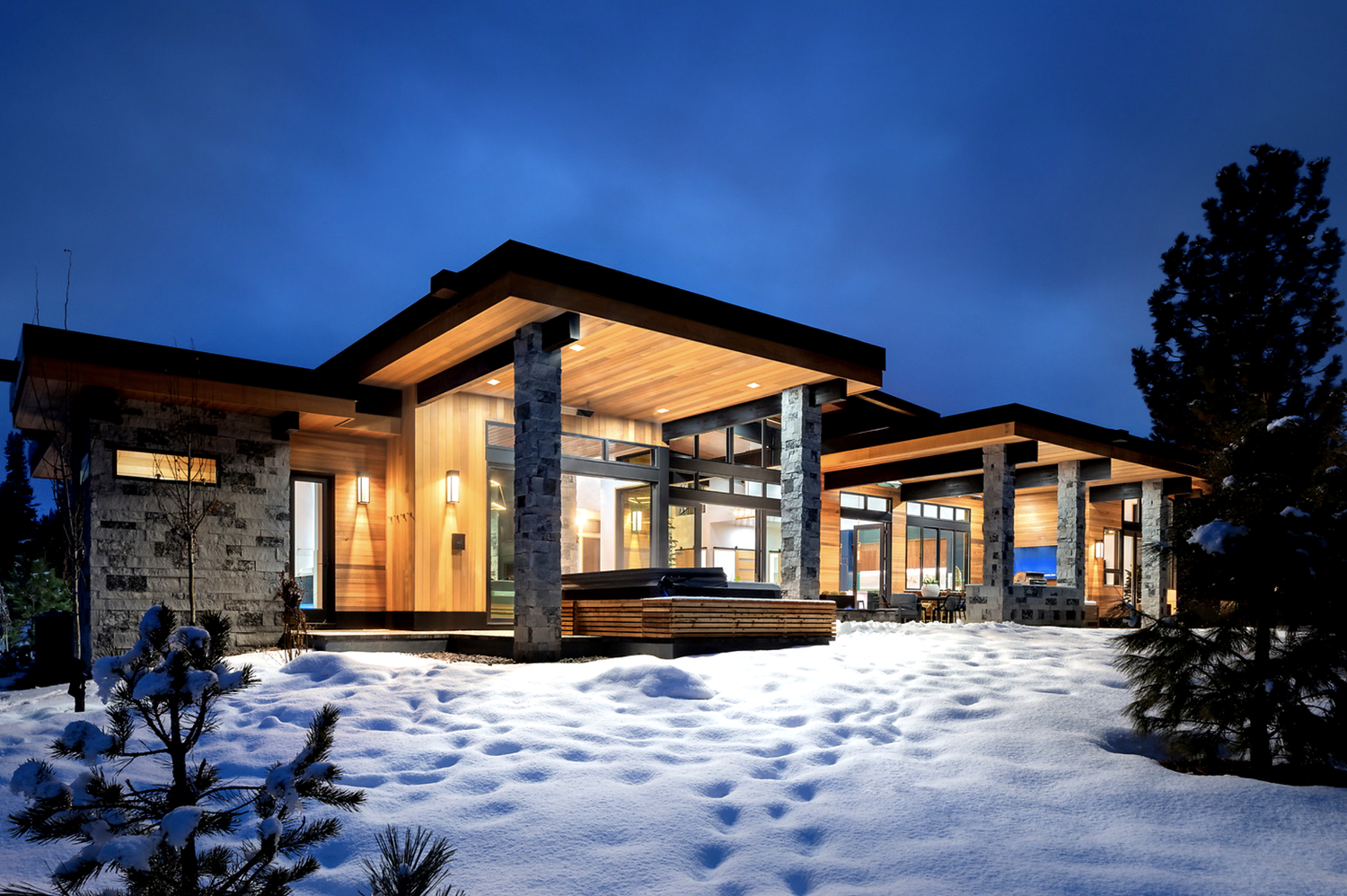
Charcoal · Grays Crossing, Truckee